Spring Build-Up and Disease Prevention in Northern Apiaries
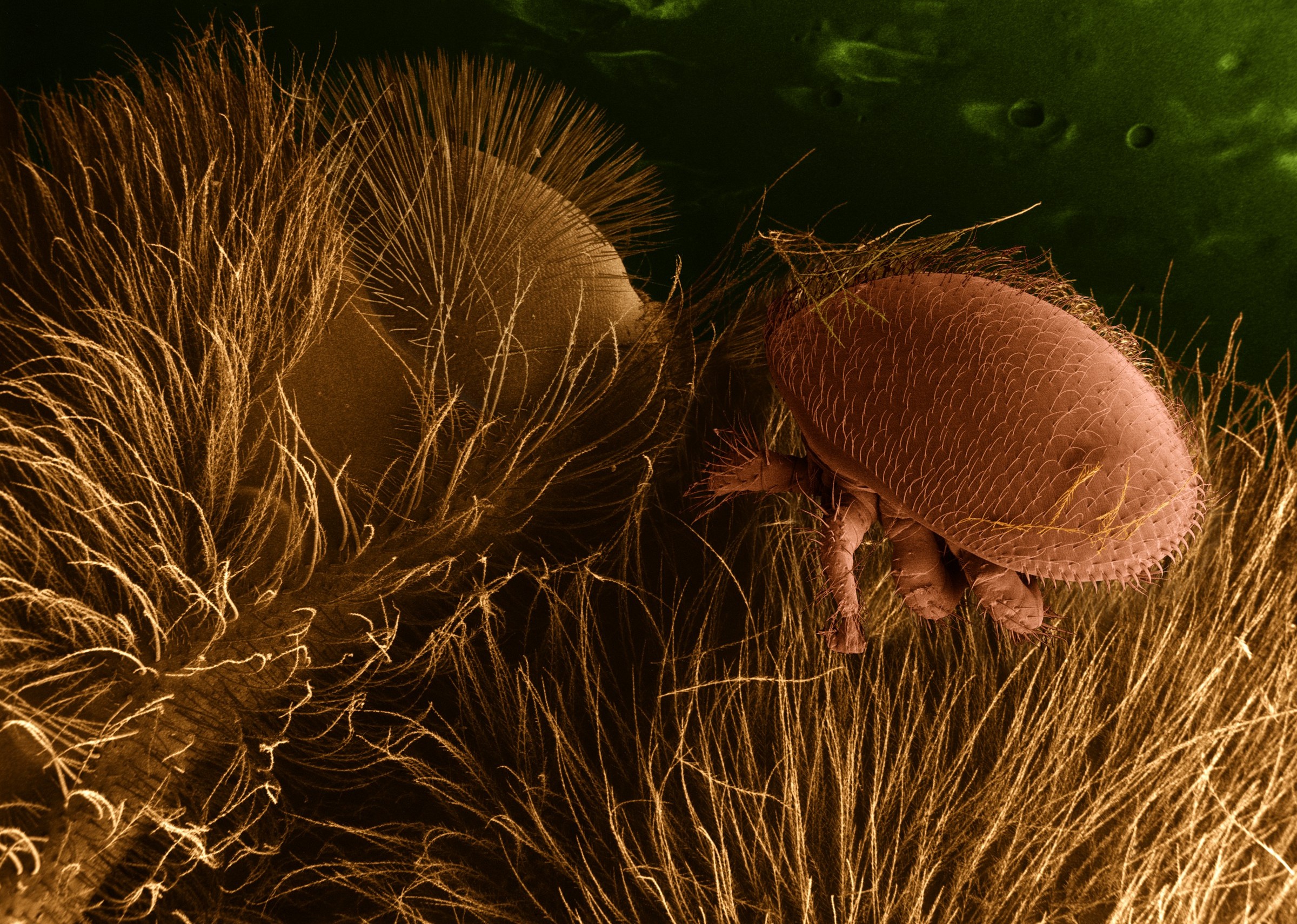
Varroa destructor mite on a honeybee host. USDA ARS (Eric Erbe, Christopher Pooley), Public Domain, Wikimedia Commons.
The first warm days of spring represent a critical window for Canadian beekeepers. After months of winter confinement, surviving colonies must rebuild rapidly to take advantage of the relatively short nectar season. At the same time, pathogens and pests that were present at reduced levels during winter begin increasing with colony activity and brood rearing.
Managing the transition from winter cluster to active hive requires balancing the need to assess colony status without causing unnecessary disruption during what is often still unstable late-winter or early-spring weather.
Timing the First Inspection
The first full hive inspection of the season should wait until temperatures are reliably above 14 °C during the middle of the day, and ideally above 18 °C, to minimize the risk of chilling open brood. In most of southern Ontario and British Columbia's Lower Mainland, this window may arrive in late March or early April. In the Prairie provinces and northern regions, it may be delayed until late April or May.
The objective of the first inspection is not comprehensive assessment — it is triage. The beekeeper is determining whether the colony is alive and queenright, approximately how many frames of bees are present, and whether stores remain adequate. A brief, focused inspection covering the innermost frames of the cluster area accomplishes this without prolonged cold exposure to the brood.
First Spring Inspection Checklist
- Queen present and laying (or evidence of recent laying: eggs, young larvae)
- Pattern of capped brood — solid pattern indicates healthy queen
- Remaining honey stores — at minimum two to three frames of capped honey adjacent to the brood
- Signs of dysentery or unusual fecal deposits on frames or outside the hive entrance
- Population estimate: how many frames of bees
- Presence of any visible disease symptoms on brood or adult bees
Varroa Mite Management
Varroa destructor is the most significant pest facing managed honeybee colonies in Canada and most of the world. The mite parasitizes honeybee brood and adults, and the viruses it vectors — particularly deformed wing virus — cause visible and invisible damage to colony health. An untreated colony in a Varroa-endemic area will typically collapse within two to three years of initial infestation.
Spring is not automatically the primary treatment period. Varroa management timing is more nuanced:
Monitoring Before Treating
Treatment should be based on measured mite loads rather than calendar-based assumptions. The alcohol wash and the sugar roll are the two most common monitoring methods. An alcohol wash involves taking a sample of approximately 300 bees from the brood area, mixing them with alcohol, and counting the mites that wash off. A rate above 3 mites per 100 bees during the brood season is a widely cited threshold for action, though thresholds vary by guidance source and time of year.
Sticky boards placed beneath screened bottom boards provide a passive mite drop count, though this method is less precise than the alcohol wash and requires correction factors based on colony size and season. The Canadian Association of Professional Apiculturists (CAPA) publishes monitoring and treatment guidance updated for Canadian conditions.
Approved Treatments in Canada
Treatment options available in Canada are regulated by Health Canada's Veterinary Drugs Directorate. Treatments approved for Varroa management include oxalic acid (available in various delivery formats), formic acid (MITE-AWAY QUICK STRIPS and similar products), and thymol-based treatments (Thymovar, ApiLife Var). Each has specific temperature requirements that affect their efficacy and timing.
Oxalic acid applied by vaporization is most effective when the colony is broodless — a condition that occurs naturally in late autumn and sometimes briefly in early spring after a long winter. Formic acid treatments require ambient temperatures in a specific range and are typically used during the active season. Thymol treatments also have temperature requirements and are generally used in late summer or early autumn.
| Treatment Type | Optimal Timing | Temperature Requirement | Brood Condition |
|---|---|---|---|
| Oxalic acid (vaporization) | Broodless period | Above 0 °C | Most effective broodless |
| Formic acid (MAQS) | Late summer / early autumn | 10–29 °C | Can be used with brood |
| Thymol | Late summer | 15–25 °C preferred | With brood |
Nosema Considerations
Nosema is a microsporidian gut pathogen of adult bees. Two species affect European honeybees in Canada: Nosema apis and Nosema ceranae. N. ceranae has become more prevalent in recent years and is more difficult to detect through symptoms alone, as it does not consistently produce the dysentery signs associated with N. apis.
Definitive diagnosis of Nosema requires microscopic examination of a bee sample — counting spores per bee in a sample of adult bees from the hive entrance or from foragers. Provincial apiarists and some university laboratories in Canada offer this service.
Fumagillin, previously the primary treatment for Nosema in North America, is no longer available in Canada. Current management focuses on minimizing conditions that promote Nosema buildup: ensuring colonies have adequate honey stores to avoid starvation stress, replacing old dark comb where spore loads accumulate, and maintaining strong, well-populated colonies.
American Foulbrood
American foulbrood (AFB), caused by the bacterium Paenibacillus larvae, is a provincially reportable disease in all Canadian provinces. The infection kills honeybee larvae and forms heat- and chemical-resistant spores that can remain viable in equipment for decades. Equipment from an AFB-affected colony must be destroyed by burning in most provincial regulations — it cannot be salvaged by cleaning.
Detection involves recognizing the characteristic sunken, discolored, and perforated cappings of infected cells, the stringy ropiness test (inserting a matchstick into a suspicious cell and observing a strand when it is withdrawn), and a distinctive sour, glue-like smell. Any suspected AFB case should be reported to the provincial apiarist. Moving equipment from an affected site before reporting can spread the disease.
Spring Feeding
Colonies that have consumed most of their winter stores before natural forage begins are candidates for supplemental feeding. Thin syrup (1:1 sugar to water) is used in spring to stimulate brood rearing, as the consistency mimics incoming nectar. This is distinct from the thick autumn syrup used to build stores.
Pollen substitute patties placed on top bars above the brood area can supplement or replace early pollen sources when natural pollen availability is low. In Prairie regions where spring can be delayed and the canola bloom represents the primary early-season pollen and nectar source, colonies managed on pollen substitute before the bloom can enter that nectar flow with a stronger population than colonies relying on forage alone.